Semiconductor characterization typically requires both IV (current vs voltage) and CV (capacitance vs voltage) measurements. These two measurements often require different test instruments and configurations. In addition modern IV and CV characterization of memory cells or copper interconnects often requires tests which are highly demanding and push the limits of system capabilities; ultra-low current (<1 femtoamp) or low voltage (<1µvolt) resolutions.
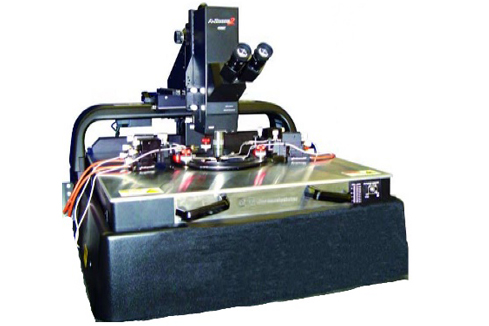
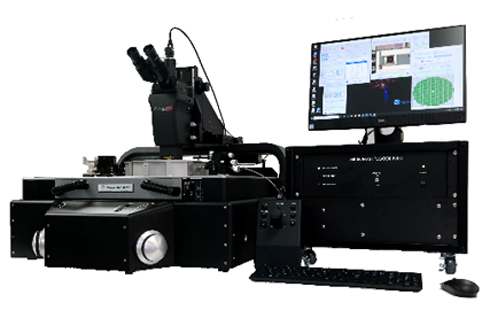
Micromanipulator offers a systems approach to CV and IV measurements to insure a proper configuration. A
IV / CV Probing Seminar is available on a DC-ROM; you may request this seminar through this web site or through your local sales representative.
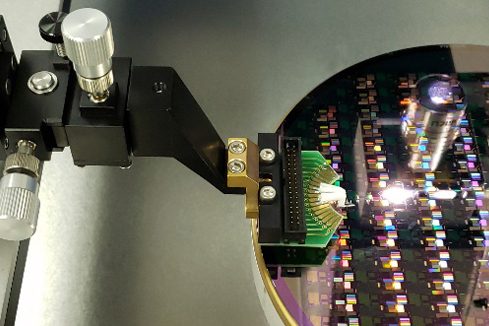
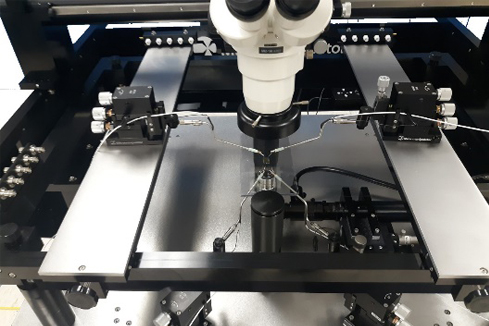
IV measurements are concerned with current leakage and use DC current to perform the test. Low level current measurements require shielding and control of the test environment. Precise IV measurement in the femtoamp and attoamp range typically require the use of triaxial Kelvin probes/probe holders with force and sense connections to control the leakage currents. Low level IV measurements are also sensitive vibrations which can result in varying resistance at the probe tip and induced currents in the system cables.
IV tests include Charge to Breakdown (QBD), Time-Dependent Dielectric Breakdown (TDDB), Stress-Induced Leakage Current (SILC), and Tunneling Current (Direct Tunneling or Fowler-Nordheim).
Probe Station IV Measurement Challenges
- Low-noise construction of cables, probe/probe holders and station to remove stray currents from the measurement.
- Triaxial Kelvin probes/probe holders to provide a clean connection from the measurement instrument to the device under test (DUT).
- Light/EMI shielding is needed to protect light and EMI sensitive test devices from interference.
- Vibration isolation systems are needed to reduce or eliminate vibration induced changes in the test results.
CV measurements are concerned with capacitance of the entire test system including cables, probe and connectors and use AC voltage signals to perform the test. Typically tests require some method of compensation to ensure accurate CV measurements. Proper connection of the test equipment to the device under test is required (high potential vs low potential).
A wide number of test methods are developed for making CV measurements. Typical parameters extracted from test data include gate oxide thickness (tox), substrate impurity concentration (Nsub), flatband capacitance (Cfb), flat band voltage (Vfb), surface charge density (Qss), threshold voltage (Vth) and effective/total bulk oxide charge.
Probe Station CV Measurement Challenges
- Capacitance measurements require an AC signal which must be cleanly transmitted to the device under test (DUT). This requires cables and probes/probe holders which can operate under the test frequencies needed.
- Compensation for cables and probes/probe holders must be made. The length of the cables from the measurement instrument to the device under test (DUT) has an impact on the capacitance measurement and the cable capacitance must be removed from the measurement. Similarly the probe/probe holder capacitance needs to be removed from the measurement.
- A capacitance current return path may be established between the measurement instrument and the DUT via the outer shield conductor of the coaxial cable. This may result in inductance instability and degrade the test measurement especially at higher frequencies. This may require the outer shield of the test probes/probe holders to be connected close to the DUT.