Micromanipulator Company: Analytical Probing for Professionals

For Larger View Click on Image
large image

Electromigration and Metal Stress Voiding

Electromigration - EM

With the flow of current through a line the metal migrates (moves) creating opens (voids) and shorts. In order to create electromigration conditions the current density (current level and line size) must be past a certain threshold. Temperature can accelerate the electromigration. (Note: Some materials higher temperature can slow EM).

Electromigration Tests
  • Voltage stress is applied to drive current through devices or test structures.
  • Current levels can be high, ampere levels
  • The current is monitored for opens or shorts.
  • Defects can occur and then “heal” in rapid succession;
    sites need to be monitored individually with multiple probes or probe cards
  • Tests are long term
  • Done with and without elevated temperature depending on activation energy characteristics of materials.
  • Tests commonly done on both packaged parts and wafers (multiple contact points are typical).
  • Tests are not light sensitive

Metal Stress Voiding

Mechanical stress due to the differences in thermal expansion of a metal line relative to the surrounding material pulls the metal line apart. The volume of the metal line is reduced which makes this location a prime site for electromigration failures. Stress voiding is the most prevalent failure in integrated circuits.

Key failure components/conditions
  • Large unrelieved stress within the metal due to temperature change: creating a grain boundary diffusion path
  • Diffusion path and sufficient temperature to allow the void to grow
  • Temperature change must be within a certain range to create stress
    • Stress forces are relieved at high temperatures
    • Diffusion is low at low temperatures
    • Stress forces are highest at "intermediate" temperatures (100 to 150°C)
  • A defect must be present to convert the stress to a stress “gradient”
  • Once the stress void appears, the long-term failure mechanism is Electromigration

The same test characteristics and equipment for Electromigration apply to Metal Stress Voiding.

Electromigration/Metal Stress Voiding Test Equipment


Stations
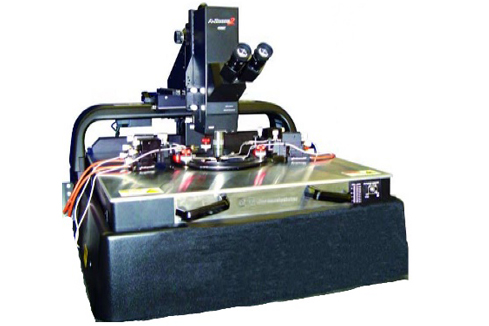
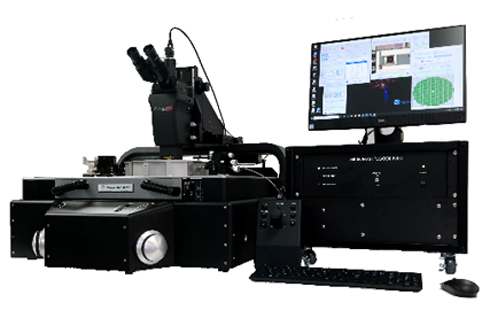
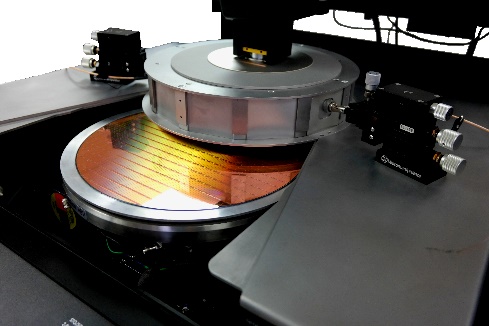
4000, 8000, or P200-300 series manual, motorized or semiautomatic stations: Feature highly stable base for long term tests and integrated thermal chuck connections.

Thermal Chucks: to control test temperatures and accelerate testing)
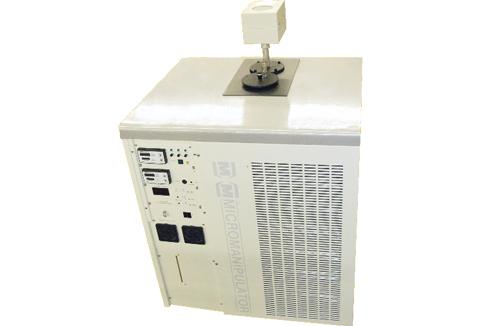
Thermal chuck range: -65°C to +400°C for 6 and 8" (150 and 200mm); -55° to +300°C for 12" (300mm) chucks.
Thermal chuck cast-in heating and cooling elements provide thermal ramp speed and surface uniformity.
Thermal chuck special mount and design reduces expansion of surface into the probes (minimizes contact resistance changes).
Thermal chuck base “radiator” cooled to prevent heat from getting to probe station stage causing expansion / movement and reliability issues

Sample Contacts
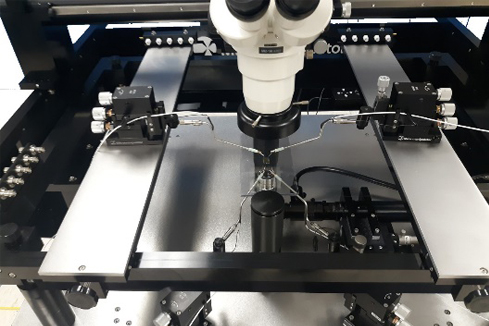
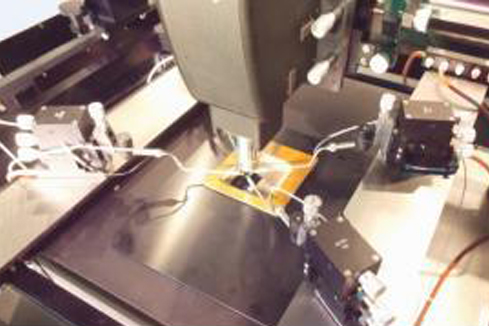
  • Multiple manipulators and probes can test multiple test sites at any location on the wafer and in any test site pattern. The P200-300, 8000 and 4000 series probe stations offer large platen to hold many manipulators.
  • Wave Manipulators with VersaTiles™ multiple probes provide super stability, long-term contact and flexibility. Wave Manipulators feature:
    • “Link Arms” provide support and force for large pin counts
    • 5 Axis of motion, X,Y,Z, Planarity and Theta
    • Lead-screw/lead-nut Z drive for stability and consistent contact force
    • Vacuum-assisted magnetic bases are stable, moveable and won’t tip if vacuum fails
    • Straight and 90° attack angles for easy positioning and multi-VersaTile™ configurations
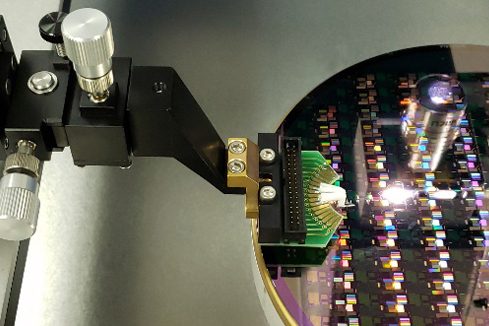
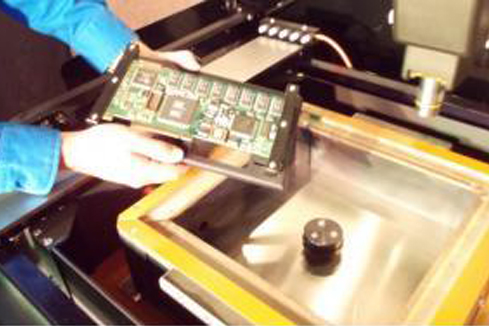
  • Low noise/low current probe card holders for 8000 and P200-300 stations which are designed to support Celadon high temperature, multi-site probe cards.

Probe Contact: Probe Holder and Probe Tip
Triaxial probes: Model 79-T provide safety shielding for high voltages and high currents. Ultra-high voltage model 79 probes are available to 5KVolt

Low contact resistance and larger probe tip are needed to handle large current densities. 7B-10G or HCT probes HCT Probe tips reduce contact resistance by up to 7X and do not develop oxide over tip!

A vibration damping station design along with a vibration isolation table provides the vibration control needed to insure probe contact remains constant.

Summary
  • All tests require good contact with long term stability.
  • Thermal chucks are needed for accelerating failures. The H1000’s unique design is ideal.
  • Individual probes are needed for small devices.
  • Integrated systems of manipulators, probe holder and probes for high stability and contact integrity.
  • Stations which support Wave manipulators with VersaTiles™ and Multi-site probe cards.

Related Products


Where to Buy

Ready to purchase our products? Find a sales rep near you or check our used equipment sale for great deals on demo, refurbished and discontinued equipment.